· OCT 5
How to Choose Your Size: 8 x 12, 12 x 14 or 14 x 16
A practical guide to finding the scale that gives your artwork enough room to breathe.
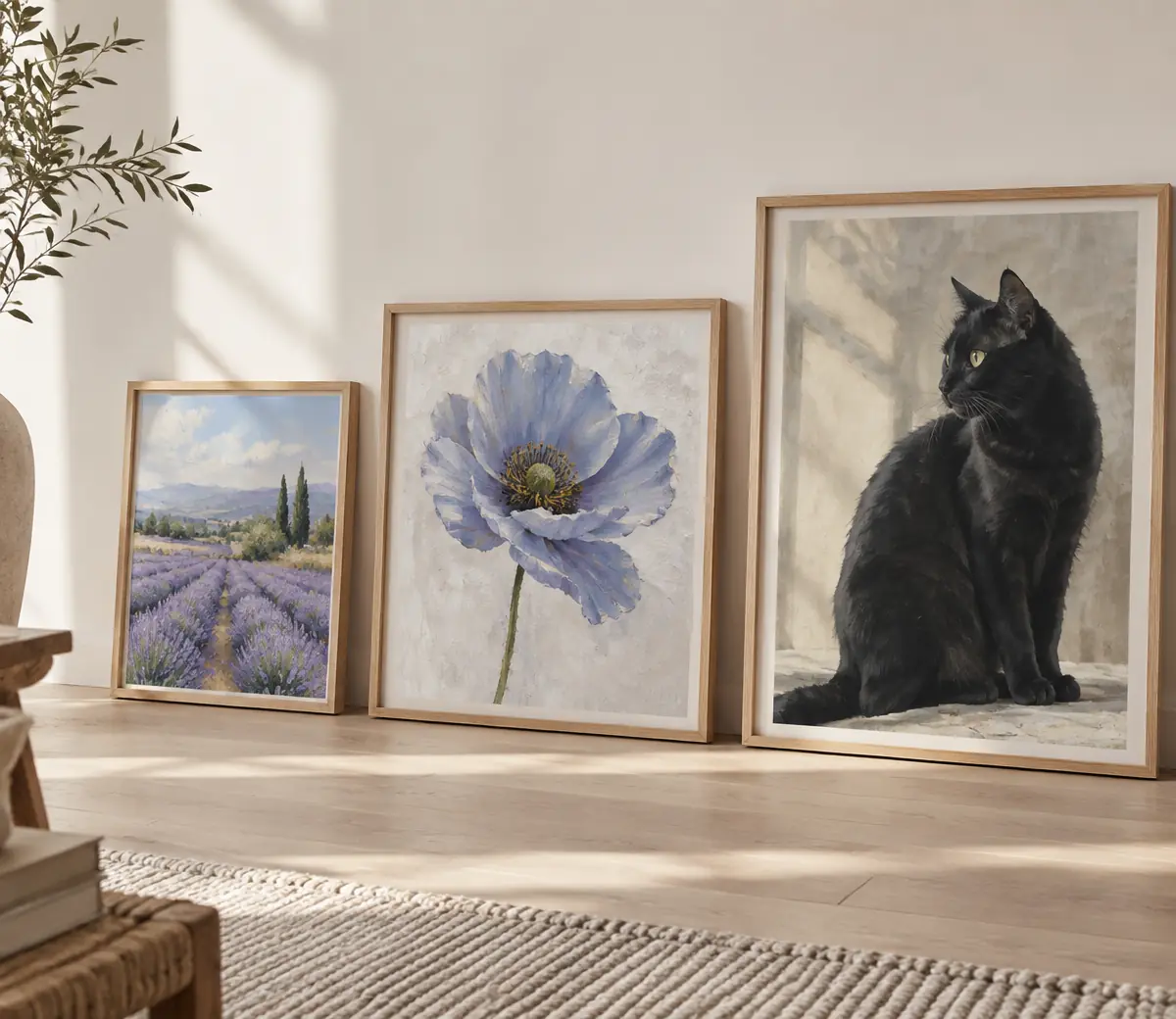
Start by looking at the empty space around the place where the art will hang. The wall, furniture, lamp, and nearby objects all form part of the composition. A piece should feel connected to those elements without being crowded by them.
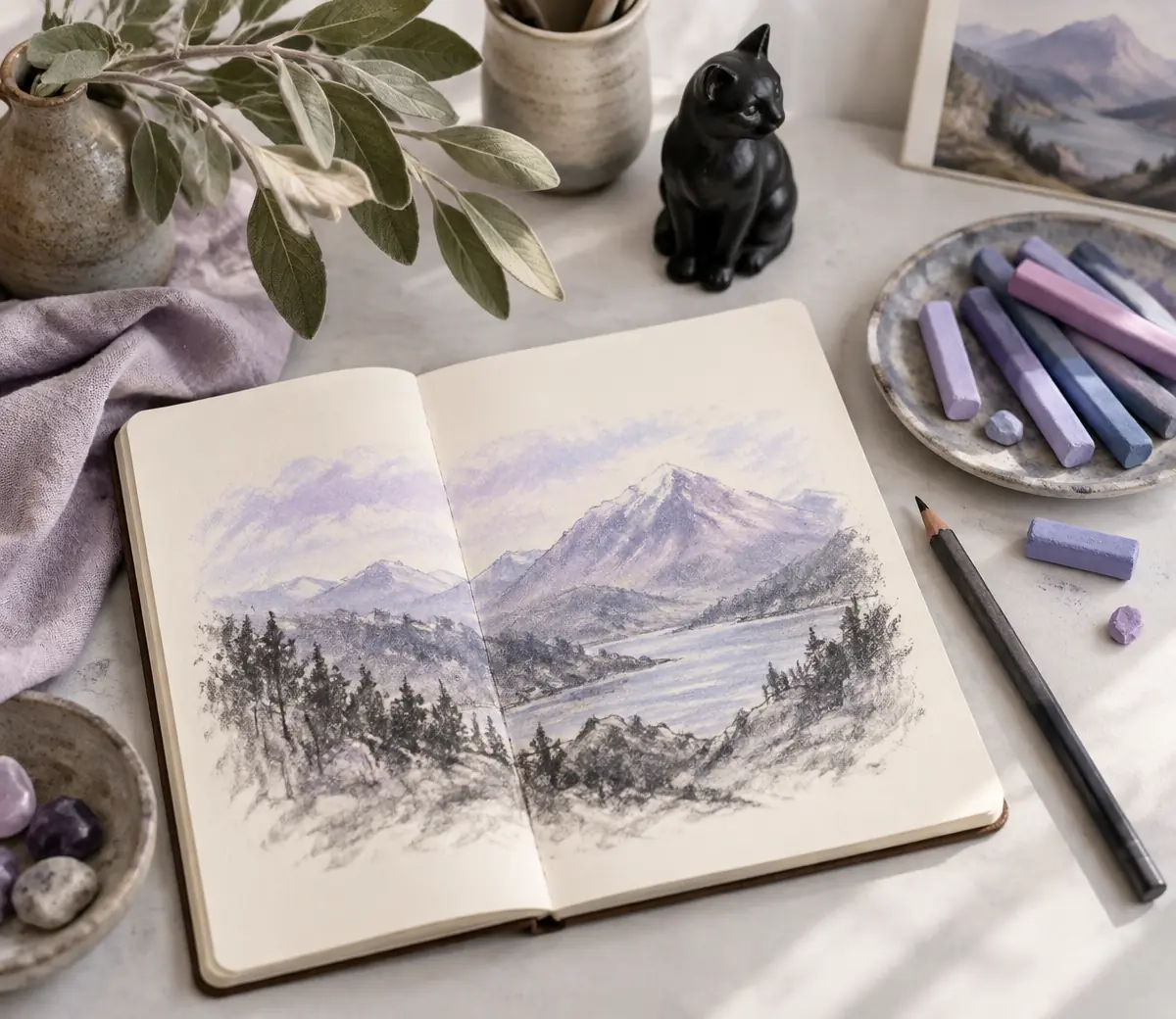
An 8 x 12 artwork is ideal for intimate places. Consider a bedside table, a narrow shelf, a reading corner, or one position within a larger gallery wall. Its smaller scale invites you to step closer and notice paper grain, blended pastel, and subtle marks.
The best size is not always the largest. It is the one that feels intentional in the space around it.
A 12 x 14 piece offers more visual presence while remaining flexible. It works well above a desk, beside a doorway, or as the center of a small arrangement. If you move often or enjoy refreshing a room, this size is especially easy to relocate.
A 14 x 16 artwork has enough scale to stand alone above a console, chair, or compact sofa. Give it breathing room so the edges do not compete with nearby shelves or frames. A simple paper template taped to the wall can help you test placement before hanging anything.
Framing changes the final footprint. A mat and frame can add several inches to every side, making a smaller work feel more substantial. Measure the full framed dimensions, keep the center near comfortable eye level, and trust the arrangement that feels calm rather than crowded.