· OCT 3
Four Mediums, Four Moods
How paper, wax, paint, and charcoal each bring a different kind of energy to an artwork.
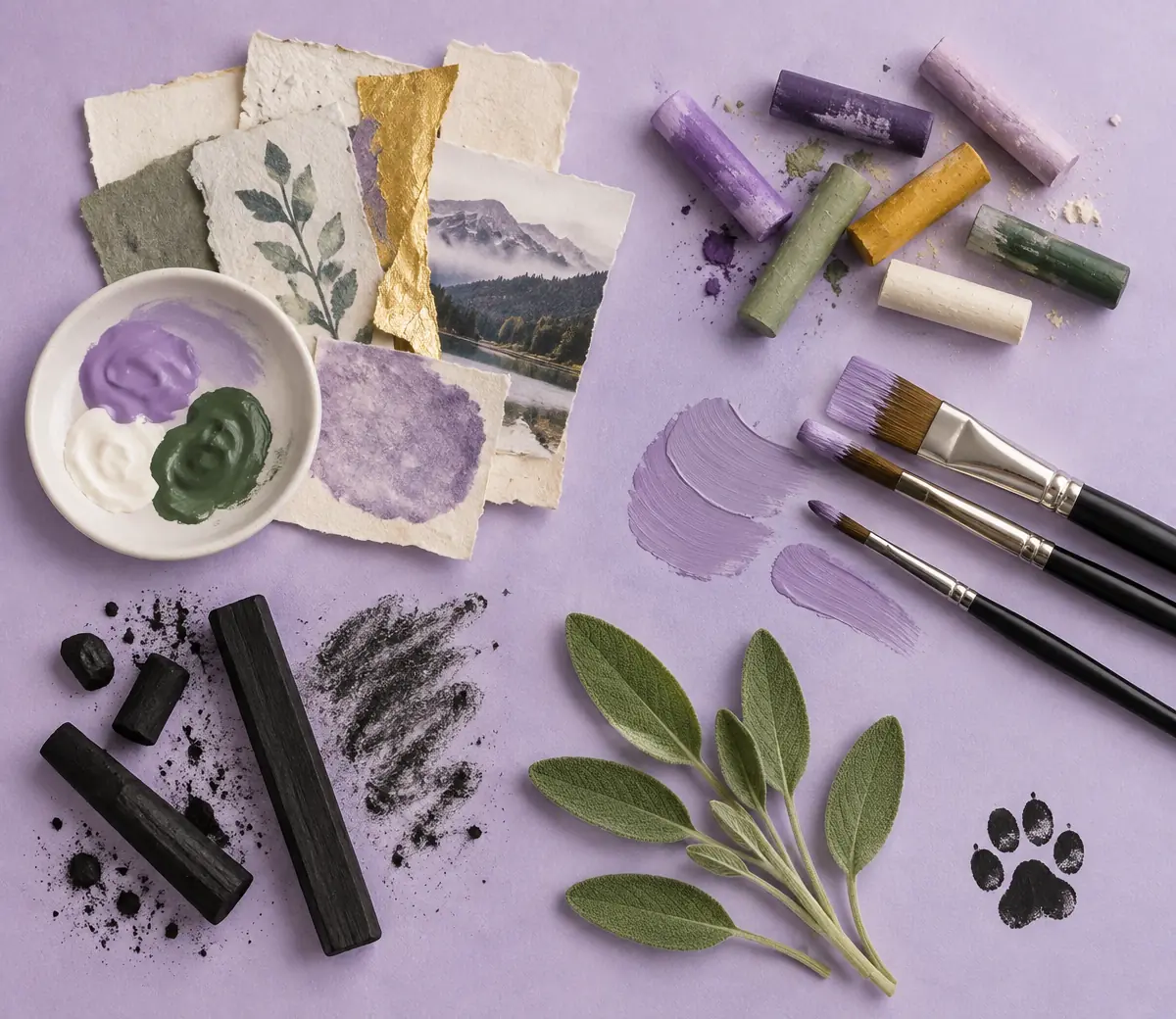
Every art medium has its own pace and personality. Mixed media is naturally layered. Torn paper, paint, pencil, and found texture can sit together in one surface, creating small changes that reward a closer look. It often feels collected and atmospheric, making it a natural choice for rooms with tactile fabrics and simple furniture.
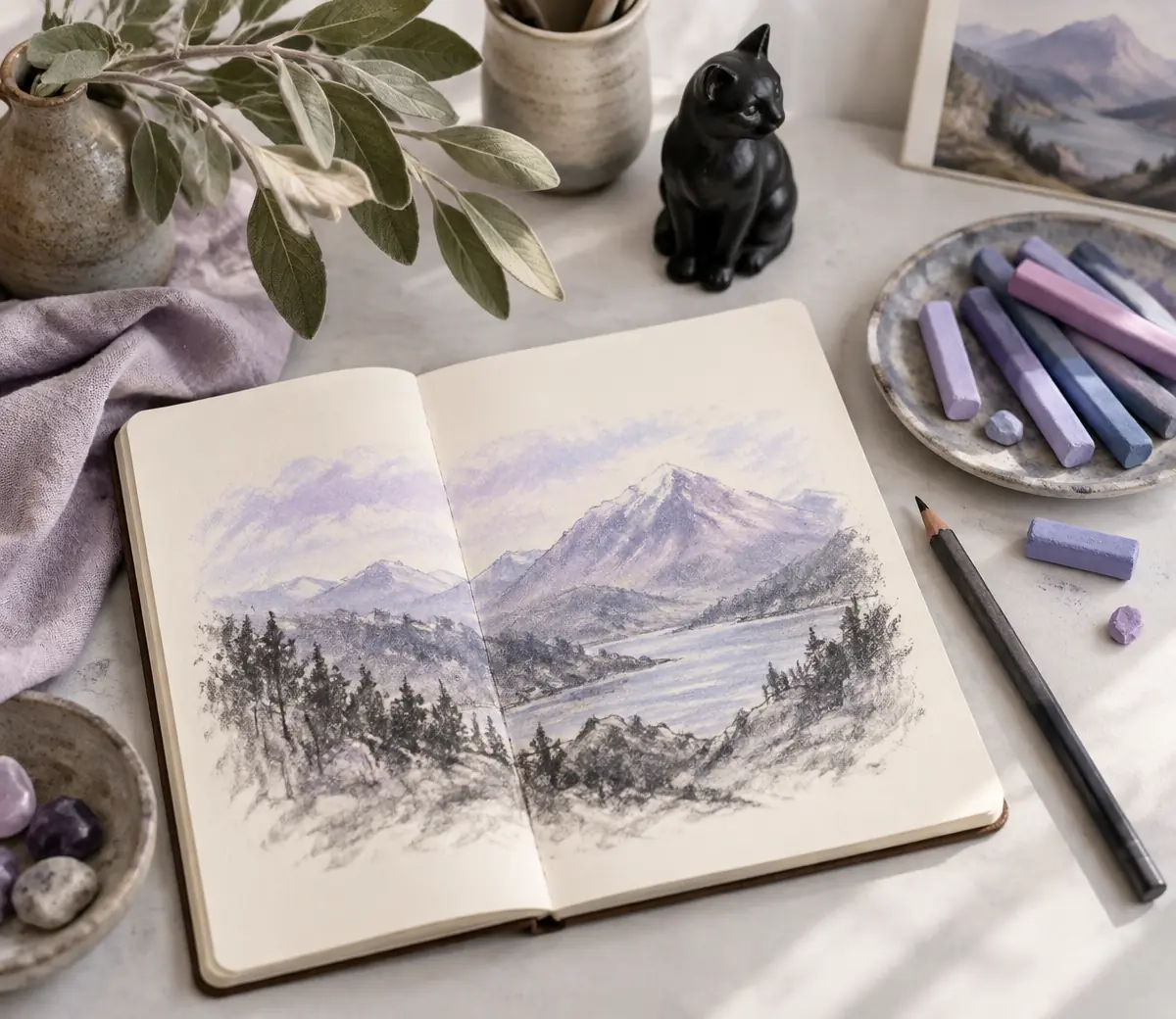
Oil pastel is softer and more immediate. The waxy pigment can be blended into misty transitions or left as a bold visible stroke. Pastel color often has a gentle depth because it sits on the surface of the paper and catches light differently across each mark.
Texture changes how color feels, even before you can name the material that made it.
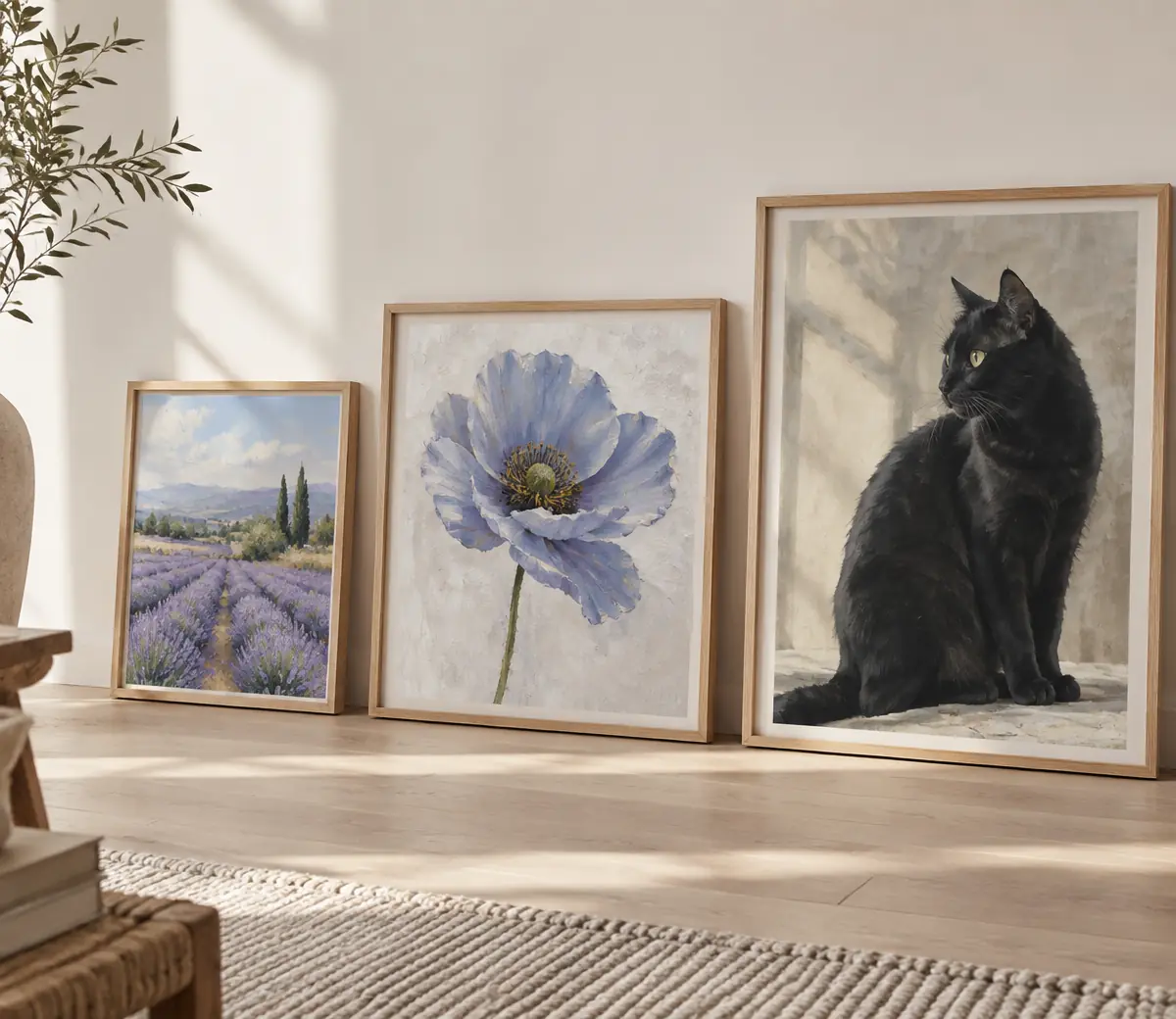
Acrylic can move between transparent washes and confident areas of color. Its clean edges and luminous layers work well when you want a piece to hold a room from across the space. It can feel polished without losing the evidence of the brush.
Charcoal is the most restrained of the four, but never the least expressive. A single dark line can describe posture, motion, and character. Smudged charcoal creates a soft field of gray, while sharper marks pull the eye toward details such as ears, paws, and a curled tail.
When choosing among them, think less about matching a label and more about the atmosphere you want. Layered, velvety, luminous, or grounded can be a useful starting point. Each medium brings its own mood, and each can live beautifully beside the others.